The Trailer Winch Fix Nobody Confirmed Was Actually the Right Call
Why relocating winch mounting holes lower and slotting the beam for a straight line to the bow eye is standard trailer engineering, not a risky improvisation.
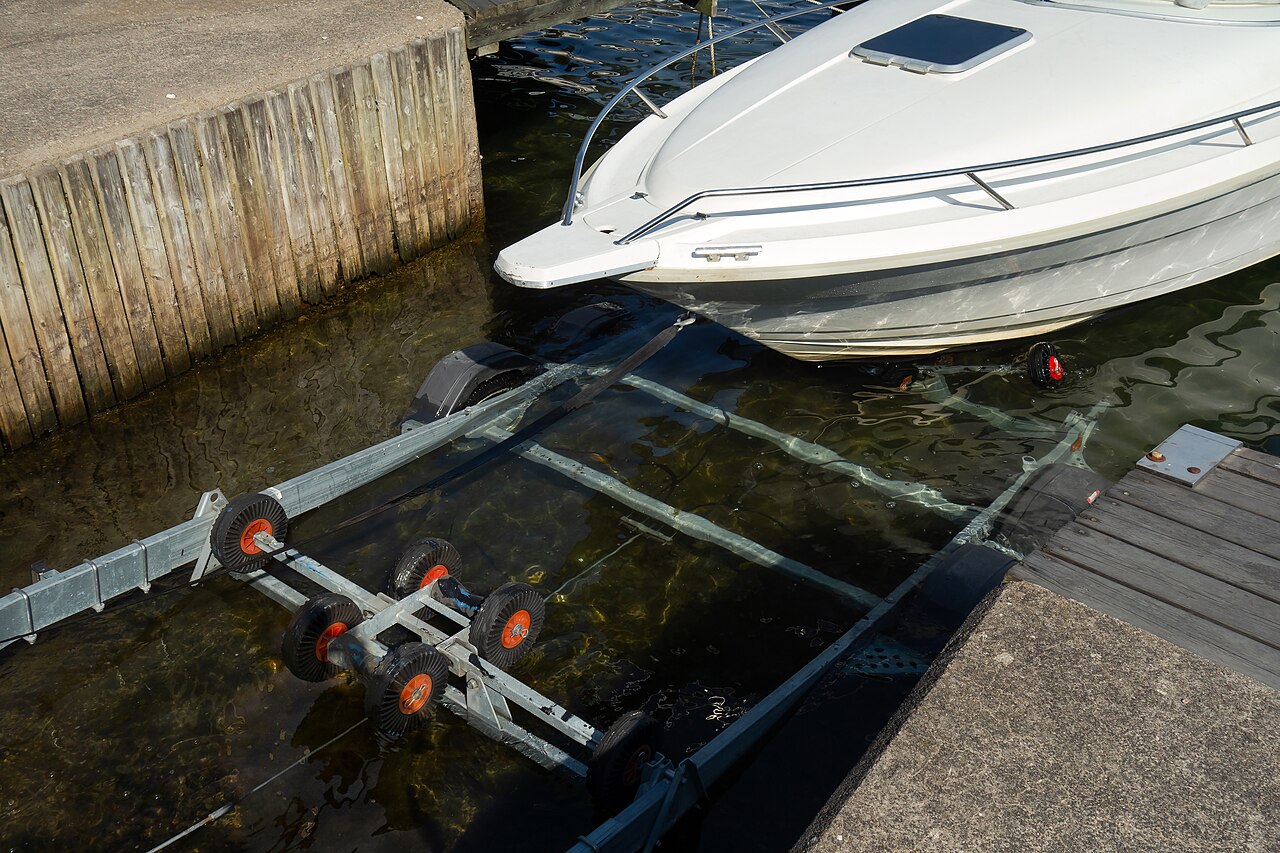
A trailer owner posted a manufacturer’s proposed fix before committing to it, wanting a second opinion: replace the existing beam, drill the winch mounting holes lower on it, cut a slot so the cable runs in a direct line to the bow eye. He said it sounded reasonable but wanted others’ thoughts first. Three replies came in. None addressed the specific proposal. One suggested switching to a strap and hand winch instead, sidestepping the question entirely.
The proposal deserved a straight yes. Independent trailer forums, entirely separate from that original thread, converge on the same core principle: a winch cable needs to pull in as straight a line as possible directly to the bow eye. A winch mounted or angled so the cable pulls up and over the deck rather than level with the bow eye is a genuine, commonly diagnosed trailer problem, since it changes how the load transmits through the cable as the boat comes up. Guidance on setting up adjustable winch stands says the same thing directly: position the stand so it aligns with the bow eye, set the height so the cable pulls straight.
That’s exactly what the manufacturer’s three-part proposal was engineering toward. Lowering the mounting holes and slotting the beam weren’t unusual modifications. They were the standard correction for a winch pulling at the wrong angle, described in almost the same terms independent trailer discussions use for anyone with a similarly misaligned setup.
The thread’s actual failure was that none of the three replies engaged with the proposal as written. Suggesting a strap and hand winch instead answers a different question, how to avoid using a boat winch at all, rather than confirming whether the mechanical fix on the table was sound. It was. The owner just never heard that from anyone in his own thread.
What a misaligned winch actually looks like on the water tells the story better than a diagram does. If the stand sits too high, the cable pulls down and back toward the roller at an angle instead of straight forward, which drags the bow down against the bunks or rollers as it winches in rather than letting it glide up cleanly. Too low, and the cable rides up over the bow roller at an angle, which loads the roller edge instead of its center and accelerates wear on both the roller and the cable itself. Neither failure mode announces itself immediately. It shows up gradually as a roller that wears unevenly, a cable that frays at one spot instead of along its whole length, or a boat that consistently seats a few inches off-center on the bunks no matter how carefully it’s driven on.
A separate iboats thread, titled plainly “Winch cable cutting bow roller,” is a useful caveat here: alignment isn’t the only variable. Posters in that thread pointed out that a cable shouldn’t be cutting into a roller at all if the roller is doing its job and spinning freely under load — a cable dragging a groove into a roller can mean the roller itself has seized from corrosion or a dry bearing, not that the stand height is wrong. Fix the geometry on a trailer with a frozen roller and the cable will still fray, just more slowly. Both things can be true on the same trailer at once, which is exactly the kind of detail that gets lost when a fix gets framed as a single clean adjustment.
Getting the geometry right starts with the bow eye’s height above the bunks, measured with the boat sitting level on the trailer the way it actually tows. From there, the winch stand should be set so the cable or strap runs level, or very close to it, from the winch drum to the bow eye at the point where the boat is fully winched forward and seated. A commonly cited reference point among trailer builders is keeping the bow stop roughly six inches above the bow eye’s centerline, which gets most standard hull shapes close enough that only minor stand-height tweaks are needed afterward. That number shifts with hull rocker and bow shape, which is exactly why measuring the actual boat rather than trusting a fixed spec off someone else’s setup matters more here than most trailer adjustments.
The hardware itself is unglamorous and cheap relative to the boat it’s holding. A Dutton-Lainson DLX1500 hand winch, rated for 1,500 lbs with a 20-foot strap and an automatic brake, runs around $125 — a single-speed unit, fine for most trailerable center consoles and skiffs, though anyone stepping up to a heavier walkaround or larger cuddy cabin should be looking at a two-speed winch instead, since the low gear matters far more than the sticker price once a few thousand pounds of hull is most of the way up the bunks. None of that hardware choice fixes a misalignment problem on its own. A $125 winch mounted at the right height beats a $400 two-speed winch mounted at the wrong one.
Other iboats threads on this same problem back up that six-inch reference point, though not always the same way twice, which is itself instructive. One poster working through a bow-stop adjustment found their horizontal crossmember needed to come up roughly six inches before the bow stop sat properly above the bow eye; a different thread describes a bow stop sitting a full six inches below the bow eye with, in that owner’s words, “no easy way to modify the height” on the trailer as built — meaning not every trailer’s winch stand is adjustable enough to fix in place, and some genuinely do need the beam replaced or slotted, exactly as the original poster’s manufacturer proposed. A third recurring piece of advice in that same forum has nothing to do with cable angle at all: run a separate safety chain with a turnbuckle from the bow eye to the trailer frame, independent of the winch and its cable entirely, so the winch is doing the job of pulling the boat up rather than the job of holding it there through every pothole on the drive home.
The other half of getting this right has nothing to do with the beam or the stand: it’s the bow eye and its pin. Marine hardware guides are consistent on this point even when nothing else is — check the bow eye and its linchpin for rust or cracks every time before towing, and replace at the first sign of either, since that fitting is the one part of the whole system with zero redundancy if it lets go under load. Stainless bow eyes cost more than galvanized ones and hold up better against exactly that failure mode over years of saltwater launches, which is a reasonable upgrade to make at the same time as fixing winch geometry, even though it wasn’t what the original forum poster asked about.
None of this requires guesswork once the beam is slotted and the mounting holes are lowered as proposed. Winch the boat on, sight down the cable, and adjust the stand height until it runs flat. A cable with even a slight upward or downward bend at full winch is the same problem the original poster was trying to solve, just not yet fully corrected. And it’s worth saying plainly: switching to a strap-and-hand-winch setup, the suggestion that actually got posted in that original thread, is a fine upgrade on its own merits — straps don’t kink or fray the way wire cable does — but it answers a different question than the one that was asked, and it still needs the same straight-line alignment to work correctly. Swapping hardware doesn’t skip the geometry step. Nothing does.