Andaman Islands: Get the Monsoon Timing Wrong and the Whole Trip Suffers
Why popper versus jig choice in the Andamans depends on exactly where your trip lands in the October-April season.
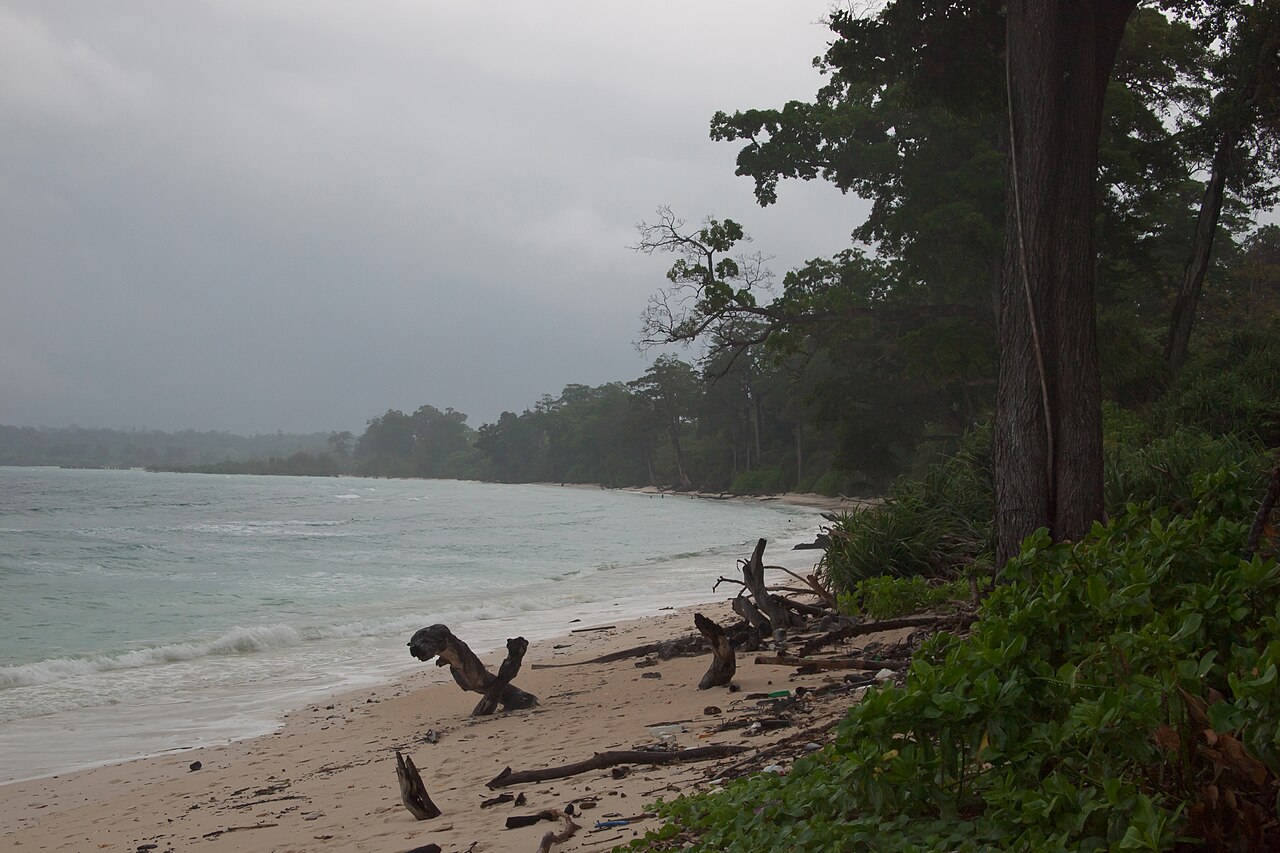
The single most common planning mistake for an Andaman GT trip isn’t tackle or technique. It’s booking around the wrong monsoon transition. India’s Meteorological Department puts the normal onset of the Southwest monsoon over the Andaman and Nicobar Islands at around May 20. But “normal” moves; IMD recorded onset over the Andaman Sea arriving roughly six days early in one recent year. Arrive in that shoulder window, whichever direction it drifts, and you’ll spend more days weathered out than actually fishing, regardless of how good the guide is.
The reliable window sits roughly October through early April, after the monsoon clears and before the pre-monsoon instability builds back up. Within that window, guides generally point to December through February as the most consistently calm stretch for sea conditions and visibility on the flats and reef edges where popper and jig fishing for GT and other trevally happens.
Popper versus jig choice responds more to water clarity and light than most general GT advice accounts for, and it doesn’t always resolve cleanly. A six-day trip report from an operator running charters out of Port Blair described the first two days of one trip as windy with minimal current. Conditions made popper fishing hard to get working properly, forcing the boat to lean on jigging instead for most of that stretch. On brighter, clearer days with good visibility, topwater poppers worked aggressively across the surface still draw strong reaction strikes from GT patrolling reef edges. But on overcast days, or once water clarity drops after rain, subsurface stickbaits or jigs worked slightly deeper tend to outproduce topwater. GT lean more on their lateral line than on sight when the water’s murky, and respond better to something they can feel moving than something skittering across a surface they can’t see well.
Local guides read this constantly and rarely explain it unprompted. Asking directly each morning why the guide is reaching for a particular lure category that day is one of the more useful things a visiting angler can do. It teaches more about real technique than any packing list.
The onset date itself is worth treating as a moving target rather than a fixed line on a calendar, since even IMD’s own forecasting shows real year-to-year drift. The department’s official “normal” onset for the Andaman Sea sits around May 20-22 based on historical averages, but its own seasonal forecasts routinely miss by close to a week in either direction, and actual arrival has landed as early as mid-May in some recent years. Anyone booking a trip near either edge of the October-April window should treat the shoulder season as inherently uncertain rather than assume a specific date on the calendar is a hard cutoff.
Structure here mixes reef edges and rocky drop-offs rather than the pure sand-flat structure of some Indian Ocean GT destinations. Retrieve paths need to account for where a hooked fish will run — generally toward the nearest reef — and drag settings need to reflect that from the moment of hookup, not after the fish has already gained ground toward cover.
Cost and access logistics improve inside the reliable season window. Boat availability and guide scheduling tighten up considerably during the December-February peak, so advance booking matters more in that specific stretch than across the broader October-April season.
Where trip planning goes wrong most often: treating “October through April” as one undifferentiated block, rather than understanding that conditions, and therefore technique and lure choice, shift meaningfully within that window depending on exactly where the trip lands relative to the monsoon transition on either end.