Cobia Sight-Casting: Leading a Moving Fish Is the Skill That Matters
Why casting ahead of a cruising cobia's path, not directly at it, and checking floating structure produce more hookups.
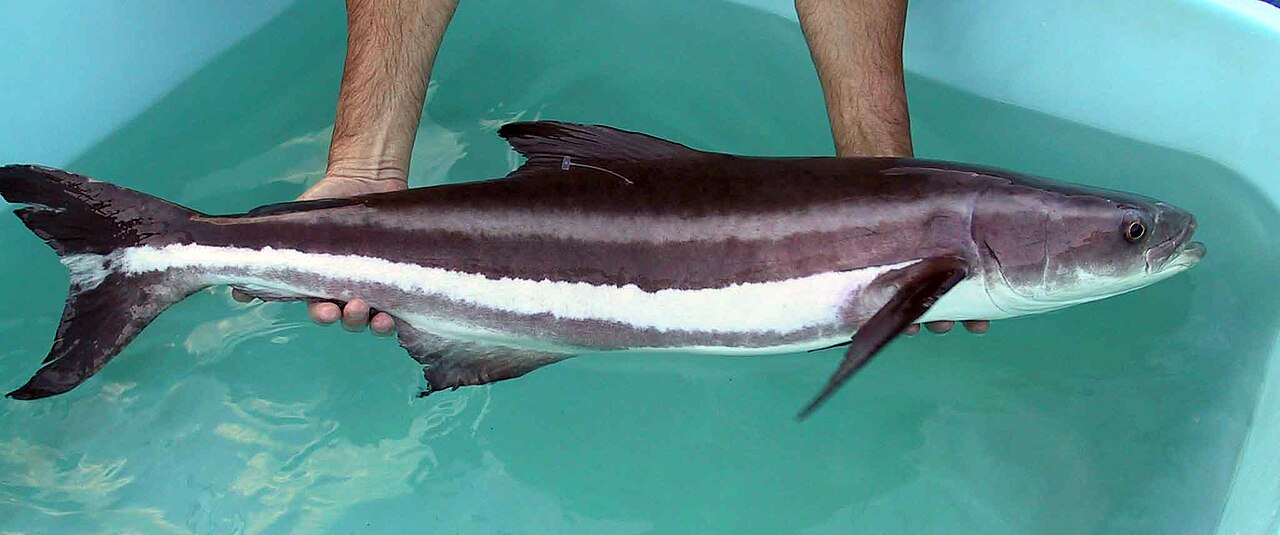
A cobia cruising just under the surface will often follow a poorly-led bait or lure out of mild curiosity without ever committing, while the same fish presented with a cast placed correctly ahead of its travel direction converts far more reliably. Leading a moving target is the single skill that separates consistent cobia success from a day of frustrating near-misses.
Cobia are frequently spotted before they’re hooked, which is both the appeal and the challenge of this species. They cruise near the surface around structure, buoys, rays, and occasionally boats themselves — curious and visible well before a cast goes out, which gives anglers real time to plan a presentation instead of reacting to a sudden, unseen strike.
Captain Austin Hayne, who runs FINAO Sport Fishing charters out of Virginia’s Chesapeake Bay and has held his Coast Guard OUPV charter captain certification since 2012, broke his approach down on a three-part episode arc of the Tom Rowland Podcast’s “How 2 Tuesday” series covering hooking, gearing up for, and landing cobia specifically. He also runs what’s become one of the higher-profile fishing livestreams on Twitch, broadcasting charters for six-plus hours at a stretch, which is part of why his specific technique breakdowns carry more real-world repetition behind them than a one-off magazine tip. His core advice: land the bait roughly fifteen feet past a cruising fish, then crank it across the surface so it swims into the cobia’s path rather than dropping six inches in front of its nose. Cobia move at something like a couple of miles an hour, slow enough that a well-placed lead works, but a bait dropped too close either spooks the fish or never registers at all. Hayne is blunt about what happens when the first cast misses: hit the fish in the tail, the back, or off to the side, and it starts dropping down and popping back up, spooky, with hookup odds falling fast from there.
The hookset mechanics reward patience that runs against a lot of anglers’ instincts. With live bait, Hayne opens the bail but pinches the line with a finger, letting the cobia eat without the bait getting torn off a closed bail — a real risk with eels, which can lose half their body to one vicious bite if the fish can’t run with it first. He gives roughly a three-count after the take before closing the bail and setting the hook.
Not every well-executed shot ends cleanly, though. Hayne considers a cobia that eats and swims straight at the boat the worst-case hookup scenario, even when everything before it went right — the geometry means the hook pulls at the wrong angle. He’ll put the boat in gear and pull away from the fish, or if it eats right at the boat, let it swim all the way to the stern before setting so the line comes tight in the opposite direction.
Structure and floating objects hold this species more consistently than open water does. Buoys, floating debris, channel markers, and even large rays near the surface often have cobia shadowing them, using the structure or the ray itself as cover. Checking any floating object encountered while running to another spot is worth the brief detour — cobia showing up this way is common enough that experienced captains treat it as standard practice, not a lucky bonus.
Bait and lure presentation both work. Live eels remain the traditional, reliable natural offering, while jigs and soft plastics worked with an erratic retrieve near structure produce consistently for anglers who prefer active lure fishing. Tackle needs to handle a genuinely strong, sustained fight for the species’ size — cobia pull hard and don’t give up quickly once hooked, and 30-50lb class spinning or conventional gear with solid drag capacity handles the average encounter without being undergunned.