Black Marlin: Why Rigged Dead Bait Still Beats Lures in Many Fisheries
Why a properly sewn dead bait often outproduces lures for black marlin, and how bonito aggregations set the season.
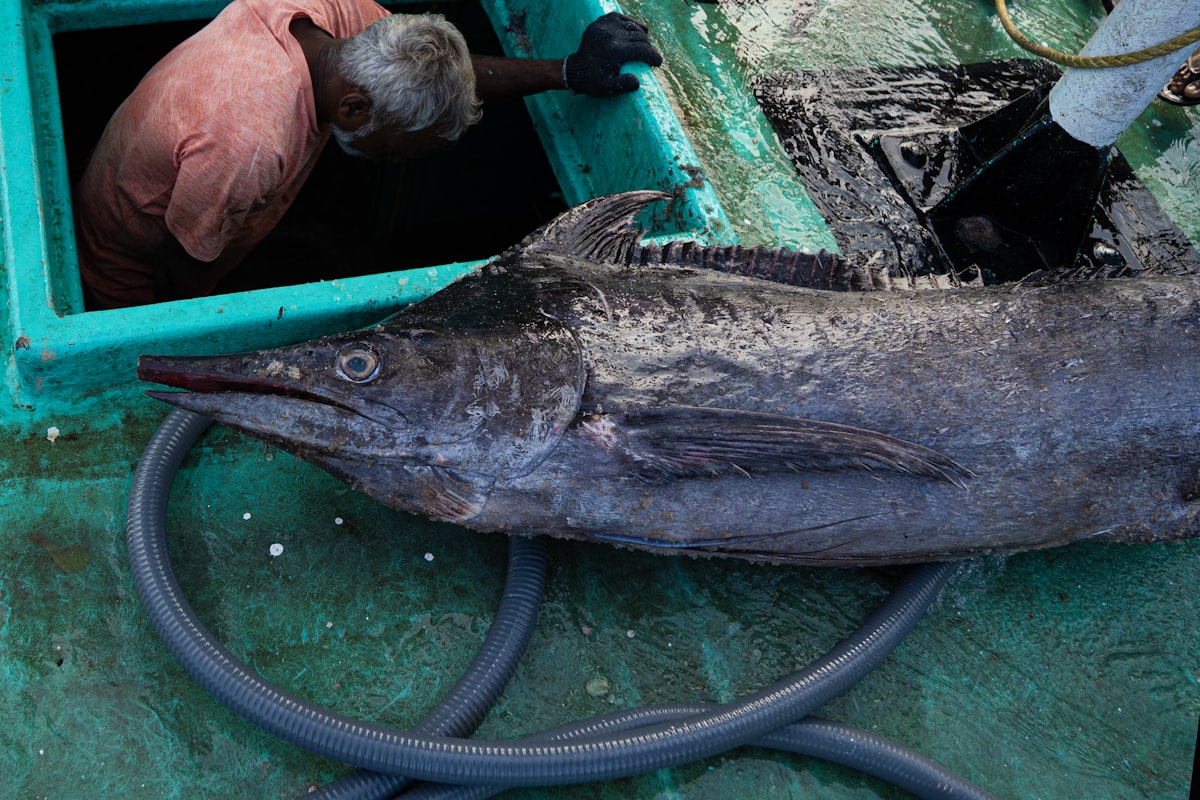
Cairns remains the reference point for serious black marlin fishing anywhere in the world, and the 2025 season there showed both ends of what the fishery can produce. Capt. Daniel Klien aboard Shore Thing logged 92 fish in 72 days, including a 1,223-pounder and, fittingly, a 1,021-pounder on the final day of the season. Capt. Leigh O’Brien on OB1 tallied 16 fish over 500 pounds, three of them over 1,100. Numbers like that don’t happen on lures alone — a large share of that fleet’s season still runs on rigged dead bait, the technique this guide focuses on.
Lure trolling gets most of the attention in general billfish content, but for black marlin specifically, a properly rigged large dead bait — often a mackerel, bonito, or similarly sized natural bait sewn onto heavy hooks — remains a genuinely superior producer in many established fisheries, and skipping it in favor of lures-only trolling leaves real opportunities on the table.
The rigging itself takes real practice. A properly sewn dead bait needs to swim naturally at trolling speed without spinning or riding unnaturally, and a poorly rigged bait, however fresh, draws far fewer strikes than a well-prepared one. This is a craft skill that experienced mates and captains develop over years — worth watching closely and asking questions about if fishing with a crew known for it.
Live bait trolling adds a third option when conditions and bait availability allow. Live bonito or mackerel trolled slowly enough to keep them swimming naturally can produce when both lures and rigged dead bait fail, particularly where black marlin have grown accustomed to more standard offerings.
Structure and season concentrate opportunity considerably in this fishery, and the timing isn’t guesswork. Cairns’ black marlin run, typically late September through early December, tracks the fish’s own reproductive cycle rather than just bait movement — tagging research published by marine biologist Michael Domeier concluded that the “relatively high seasonal abundance of black marlin off the Great Barrier Reef is, in fact, a spawning aggregation,” concentrated along the Ribbon Reefs north of Cairns. Bonito and mackerel schools holding over the same structure during those months add to the concentration, which is why timing a trip around the documented local pattern beats general “marlin season” advice covering a broader, less precise window.
Tackle for genuine black marlin work, particularly larger specimens, runs heavy — 80-130lb class conventional gear is standard, similar to the tackle considerations for blue marlin covered elsewhere in this guide.
The strike and hookset sequence rewards the same drop-back principle described for blue marlin: giving a striking fish a moment to fully commit before engaging the reel, rather than setting the hook the instant a strike is felt.
None of this is as tidy in practice as it sounds on paper. The same 2025 Cairns season that produced those record captain logs also produced a real controversy: video clips circulating from multiple boats appeared to show crew grabbing rods to shorten fights, handling the double line above the swivel, or transferring rods between anglers — breaches of rules that exist specifically to keep captures comparable and fair. The IGFA and Australia’s Game Fishing Association are producing a joint ethics video in response, and the debate hasn’t fully settled. Even in the fishery with the deepest tradition and the most experienced crews anywhere, correct technique doesn’t guarantee a clean catch by itself — the rules only work if everyone on the boat follows them under pressure, and 2025 showed that not everyone does.
A lot of modern billfish content, reflecting broader trends toward lure-based trolling for its convenience, treats rigged dead bait as an outdated, labor-intensive technique. In fisheries with a strong local tradition of dead-bait trolling, that shift can genuinely cost strikes. Asking a captain which technique actually produces best in their local water, rather than assuming lures are simply the modern default, is worth doing before a trip rather than after a slower-than-expected day.