Amberjack Jigging: 'Grind, Not Flutter' Is the Whole Technique
Why an aggressive, jarring jig cadence over wreck structure outproduces a smooth vertical retrieve for amberjack.
On the Pensacola Fishing Forum, a thread titled “Need advice on Reef Donkeys” turned, as these threads do, into a pile of very specific tackle numbers: a “new Penn 50 VISX, 60lbs of max drag, a bent-butt rod and 200lb braid, 100lb leader” from one poster; “80 or 100lb braid with at least 100lb leader about 8’ long” and a 14/0 circle hook through a hardtail’s nose from another. Nobody in the thread argued about jig cadence. They argued about how much gear is enough.
The productive jigging motion is genuinely described as a “grind” by experienced amberjack anglers — drop the jig to bottom, then work it with hard, fast, jarring upward strokes rather than a smooth pendulum-like lift. Amberjack key on erratic, wounded-looking movement, and a jig worked too smoothly often gets ignored in favor of one worked more violently.
Jig weight needs to match depth and current more aggressively than general bottom-fishing advice suggests. 3-4oz jigs suit shallower, calmer structure; 6-9oz jigs become necessary as depth and current both increase, since a jig too light simply won’t hold bottom contact or the erratic action that triggers a strike.
Gear setups discussed among Gulf anglers targeting amberjack specifically tend to converge on a similar shape regardless of exact brand: a heavy jigging rod rated for 50-100lb class paired with a conventional reel running 80lb braid, a Bimini twist connecting to 50-80lb fluorocarbon leader tied in with an Albright knot. That combination isn’t overbuilt for the species so much as matched to how amberjack actually fight, diving hard for structure the instant they feel pressure rather than running in open water where lighter gear would have a fighting chance to wear the fish down safely.
Structure specificity matters enormously here. Amberjack hold tight to wrecks, artificial reefs, and hard-bottom relief, and locating that exact structure via sonar before dropping a jig matters more than it does for roaming pelagic species — work even a short distance off the structure’s highest relief and a jig often produces nothing.
The fight is where that gear list above earns its keep. One poster on the same Pensacola thread didn’t sugarcoat it: “Folks that purposely target AJs are masochists. You’d better eat your Wheaties if you’re after a big one.” Another angler, recalling his first hookup fishing alongside his father, put it more bluntly still — the fish broke him off partway through the fight, and when his dad said it was too bad, he answered, “No. I couldn’t have stood too much more of that.” That’s not exaggeration for effect. Amberjack pull hard and dive repeatedly back toward structure once hooked, and heavy conventional or jigging tackle in the 50-80lb class range, paired with a strong drag, is what actually survives that pressure rather than what merely looks adequate on paper.
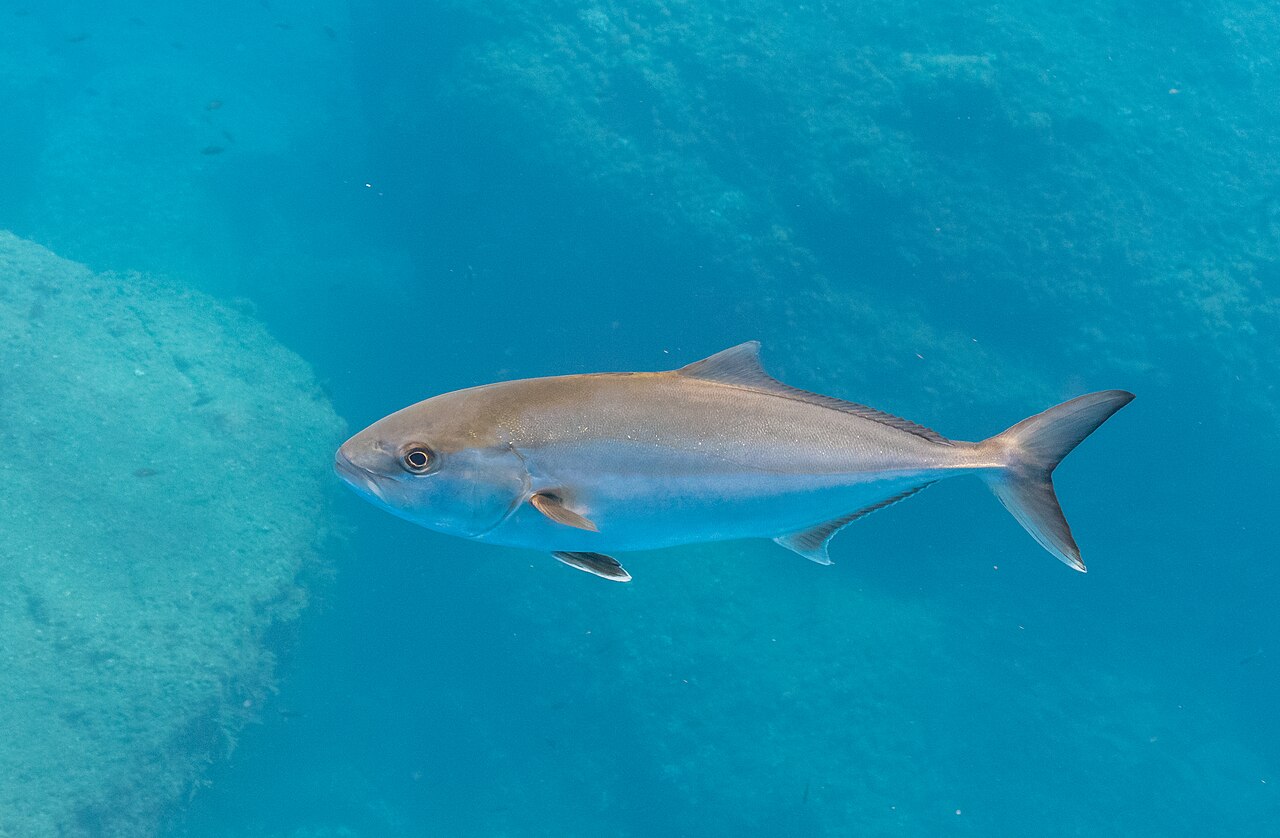
The nickname “reef donkey” gets used constantly, and for good reason — regularly cited among Gulf anglers as one of the toughest pound-for-pound fighters in the ocean, named for the sheer strength and stubbornness with which the fish resists coming up off structure. That reputation is part of why the gear discussion above tends to run heavier than newcomers expect, and why getting a hooked fish moving upward quickly, before it can dive back into cover, matters as much as the initial hookset.
A lot of bottom-fishing content treats amberjack as a secondary species while primarily targeting grouper or snapper on the same structure. If amberjack specifically is the goal, a dedicated jigging approach with the aggressive cadence described above outproduces a passive bait sitting on bottom — these fish respond to active, deliberately erratic presentation, not a static offering.